





|
School Policies & Procedures
Code of Conduct
All schools in the
Halifax Regional School Board are guided by the “Regional Code of
Conduct” Policy.
Respect
It is expected that
school members will exhibit behavior that shows respect for the rights,
property and safety of themselves and others.
Responsibility
It is expected that
school members will accept personal responsibility for their behavior in
order to maintain a safe and productive learning environment.
Rights
It is expected that
school members will honour the rights of others through the process of
learning and demonstrating appropriate behavior in the context of social
responsibility.
The above principles
are supported by the Education Act under several sections
including the Preamble and those pertaining to the duties of students,
parents, teachers, superintendents, and support staff.
Standards of
Behavior
School members will:
-
show respect for
the rights, property and safety of themselves and others
-
respect and
appreciate diversity of all school members regardless of their race,
culture, ethnicity, religion, gender, sexual orientation, age, and
ability
-
express
themselves with socially acceptable language and gestures
-
exhibit behavior
that avoids all forms of intimidation, harassment, racism, and
discrimination
-
dress in
accordance with school dress standards
-
treat school
property and the property of others with a reasonable standard of
care
-
respect the
responsibility of all school members in exercising their duties
-
promote positive
behavior through the avoidance of all types of violent acts
-
refrain from the
possession of any form of a weapon on school property
-
refrain from the
possession of, and being under the influence of, all forms of
intoxicants on school property
-
as appropriate,
attend classes, activities and events and be prepared and punctual
Academic Honesty at Lockview High School
The integrity of the Lockview High School program depends upon each
student’s strict adherence to academic honesty. Plagiarism, cheating,
misrepresentation, falsification of records or academic work, and abuse
of computer passwords and accounts constitute violations of school
policy.
Cheating:
Cheating involves submitting work in a written assignment or exam that
is not your own. Cheating includes:
·
copying someone else’s work
·
allowing someone else to copy your work
·
having someone else complete your work for you
·
using unauthorized material to help you complete your
work
LHS
students may not receive or give unauthorized assistance in preparation
of any work required for submission for course credit.
Plagiarism:
Plagiarism is a special kind of cheating in which you basically steal
someone else’s work and present it as your own. If you use the ideas,
words, statements, theories, data, figures, graphs, or electronic
information of another person or source to support your ideas, you must
always give credit to the person or source. Guidelines for citing
sources are available from teachers and in the library.
The
complete Nova Scotia Department of Education’s Public School Program’s
Internet Code of Conduct can be found at:
Cheating or plagiarism detected in an assignment, test, or exam, may
result in reduced marks, loss of value of the assignment, loss of
credit, suspension, and/or legal action.
It is important for students to complete their assignments on time so
that teachers can provide timely feedback. Timely assessment
information helps teachers and students to make decisions and plan next
steps for instruction and learning.
Assignments require due dates. When timelines and due dates are
specified, teachers must make provisions for students who legitimately
miss the dates. In such cases, the teacher and student should consult
together in order to set an absolute deadline and negotiate a plan for
successful completion.
No extensions will be given to students without a legitimate reason.
Students who miss the due date without a legitimate reason have missed
an opportunity to demonstrate progress toward the expected learning
outcomes. The missed due date will influence the student’s summative
evaluation.
The Nova Scotia Education Act clearly defines student attendance
as a responsibility that is shared among parents, students, teachers,
principals and the school board.
Students are responsible for:
·
Attending school and arriving punctually.
·
Providing a written excuse for late arrival (by the next day’s class).
·
Abiding by the Board’s attendance policy.
·
Participating fully in learning opportunities.
·
Completing all work missed during excused and unexcused absences.
Parents and guardians are expected to:
·
Ensure that
their children attend school and arrive punctually every school day.
·
Phone or
provide the school with a dated and signed written excuse within 3
school days in the event that their child is absent or no later than the
next day’s class if their child is late.
·
Communicate
with their children about the importance of daily attendance and
punctuality and their effect on learning and achievement.
·
Inform school
administrators of any special circumstances that may have an effect on
their child’s attendance prior to the date of absence.
Special
Circumstance Absences:
There
are several circumstances for which a student will be marked absent due
to special circumstances. These include:
·
Student has a documented acute or chronic medical condition requiring
hospitalisation or specialist appointments.
·
Student is absent due to a verifiable religious observance.
·
Student is absent due to a death in the immediate family.
·
Student is absent as a result of participation in an educational
opportunity or special activity as deemed appropriate by school
administration (e.g. participation in a recognized provincial, national
or international competition). This designation always requires
administrative approval prior to the event.
·
Student is absent as a direct result of legal obligations, supported by
court subpoenas or appropriate documentation.
·
Student is absent due to a suspension by school administration.
NOTE: Special Circumstances Absences DO COUNT
towards loss of exam exemptions.
Exam Exemptions Grades 10, 11, 12
If a student has
missed no more than six classes (all of which must be excused
absences) in each course in which s/he is enrolled, then the student
can elect not to write one final examination of his/her choice. Because
the mark will be based on class evaluation, it is understood that the
student cannot miss any tests or major pieces of evaluation during the
semester. Curriculum field trips and other school-sanctioned activities
are excluded from absences. Provincially mandated NSE examinations
are not eligible for exemption.
·
A
student who has had an out-of-school suspension does not qualify for the
Attendance Incentive Program.
·
Special Circumstance Absences do contribute toward the loss of
exam exemptions.
·
Exam
Exemptions do not apply to grade 9 students
Attendance Reporting Procedures

Students who are
absent from class must bring a signed and dated note from their
parent/guardian within three school days of their return
to school explaining the dates and reason for their absence. This note
should be brought to the secretary in the Student Services Office.
Alternatively, the parent/guardian may phone the school on the day of
the student’s absence (Ext.1). These absences will be considered
Excused.
Missed classes
that are not covered in the above manner will be deemed Unexcused
and students will be ineligible for an exam exemption.
Late Arrival to Class:
Ø
Students are expected to be in class when the bell rings. Students
arriving late disrupt learning opportunities for their classmates. If a
student is late for class without an acceptable reason, s/he is recorded
as late.
Ø
Chronic lateness may be referred to administration.
4 lates = 1
unexcused absence
which will result in the loss of an exam exemption.
Final Grades /
Transcripts:
Students who are
removed from a course for attendance reasons will receive a failing mark
on their permanent transcript calculated based on the work they have
completed to the date of their withdrawal. A student who is removed
from a course must continue to attend the class as a supervised
study period.
Courses Change
Requests:
a.
Course changes are subject to approval by Guidance Counsellors
in
exceptional circumstances only.
b.
Course Change Request forms are available in the Student Services
office for grade 12 students only for post-secondary
admissions only.
c.
Students will not be permitted to drop or change a course after
the published course change date.
d.
If a student withdraws from a course during the semester, the
mark earned will remain on their official transcript.
Students Living on
Their Own:
All provisions of the
Attendance Policy apply to students living on their own. In such cases,
all contact regarding the student’s attendance will be made with the
student. Students must apply for this status through Student Services.
Signing Out During
the School Day:
If a student must leave
school during the day due to an appointment, the student is asked to
report to the Student Services Office. If the absence was pre-planned,
(e.g. for an appointment) the parent/guardian should either phone the
attendance line (ext.1), or send a note excusing the absence. If the
student has suddenly become ill during the day, a parent/guardian will
be notified prior to the student being excused from school.
‘George’ Online Attendance
Computer/Internet Acceptable Use Policy
School Routines and Policies
Cell Phone Use:
The Halifax
Regional School Board believes that all students have a right to feel
safe and a right to privacy in our schools. There are telephones in
every classroom and it is not necessary to bring a cell
phone or pager to school. Cell phone use is disruptive to the learning
environment and, if inappropriately used, it can violate the right to
privacy of students and staff. Consequently, cell phones and pagers
are NOT permitted to be used anywhere in the school
building during the school day.
Electronic Devices:
Electronic devices
such as MP3 players, (iPods, etc.) cameras, and cell phones are NOT
needed in the learning environment.
Students who bring
these items to school do so completely at their own risk.
The school accepts
no responsibility or liability for the loss or theft of these items.
Gambling:
All forms of
gambling, with or without money, are prohibited on the school site. The
use of poker chips or other objects used to gamble are also prohibited.
Smoking:
The use of tobacco
products is strictly prohibited on school property by NS provincial law.
The consequences of using tobacco products at school may be:
§
A
conference with the student and a parent
§
A
referral to a smoking cessation program
§
An
In-School Suspension
§
An
Out-of-School Suspension
School Property:
It is STRONGLY recommended that
students remain on school property throughout the day.
Students who choose to leave the school site should have their
parent/guardian’s permission to do so. Students are only permitted to be
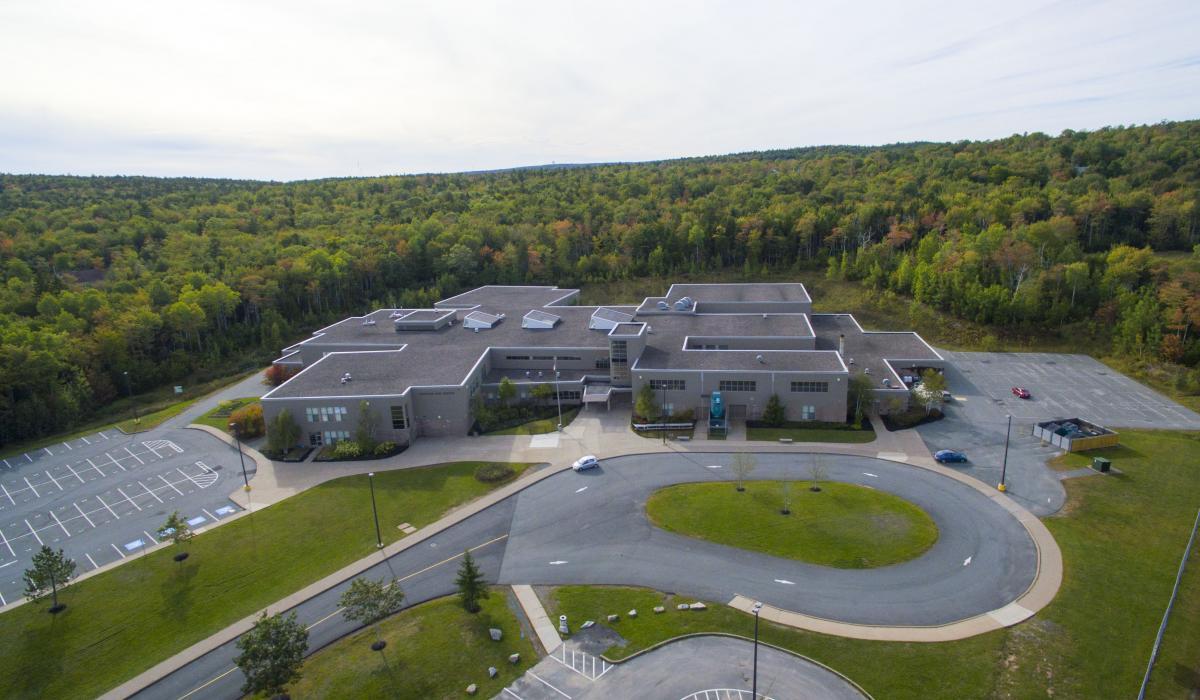
on the cleared areas of the school property and MUST NOT
go into the woods surrounding the school. Students who go into the
wooded areas may be suspended.
Student Vehicles:
There are a
limited number of parking spaces available for students. Students must
apply for Parking Permits. Grade 12 students will be given first
priority, then grade 11 students, and so on. Students who drive a
vehicle to school must apply for a parking permit and will:
Ø
park
at their own risk
Ø
display their school Parking Permit prominently on the dashboard
Ø
park
in the designated student parking lot
Ø
not
park in the bus loop, fire lanes, or staff parking lot
Ø
drive responsibly and obey all laws and posted traffic signs
Students are not
permitted to loiter in or around vehicles during the school day.
The school is not responsible
for monitoring parking areas or for any damage that may occur to
vehicles. Vehicles not displaying a valid permit may be ticketed and/or
towed.
Dress Code:
Staff, students,
and visitors are expected to dress appropriately for an educational
setting. Clothing which is overly revealing or that displays
inappropriate language, offensive phrases and symbols, or promotes
alcohol or other drugs are not acceptable.
Appropriate Use of
Building:
Lockview has a
student and staff population of over 1300 individuals. Appropriate,
respectful, and safe behaviour at school is extremely important.
Students are asked
not to stand in or near doorways or to block hallways or stairwells as
this poses a safety hazard.
The use of sports
equipment (basketballs, hacky sacks, and so on) is not permitted in the
school other than in the gymnasium.
Garbage and
recycling containers are located throughout the building. Students are
asked to promptly dispose of their garbage and not leave waste on
cafetorium tables or on hallway floors.
Skateboards and
Bicycles are NOT to be used on school property.
Study Periods:
Grade 11 and 12 students are permitted to have a
study period in their timetable. Students with a study period will
either go to the cafetorium, the library, or outside. Students
must not be in the main forum, hallways or Pod areas during
class time.
Scent-Sensitive Environment
It is of vital
importance that all individuals within our school respect those
who are affected by the use of scented products, colognes and perfumes.
It is essential that all staff, students, and visitors to our school
help to create an environment where all members of our school community
can be healthy and safe. Being fragrance-free is an important step in
establishing a safe, healthy learning environment. Students, staff and
visitors are asked to wear unscented products.
Recognition of Achievement
|